Decoding Thyroid Panels: Understanding TSH, Free T3, and Free T4
Learn how the thyroid regulating hormone loop works, clinical signs of underactive/overactive thyroid panels, and normal references boundaries.
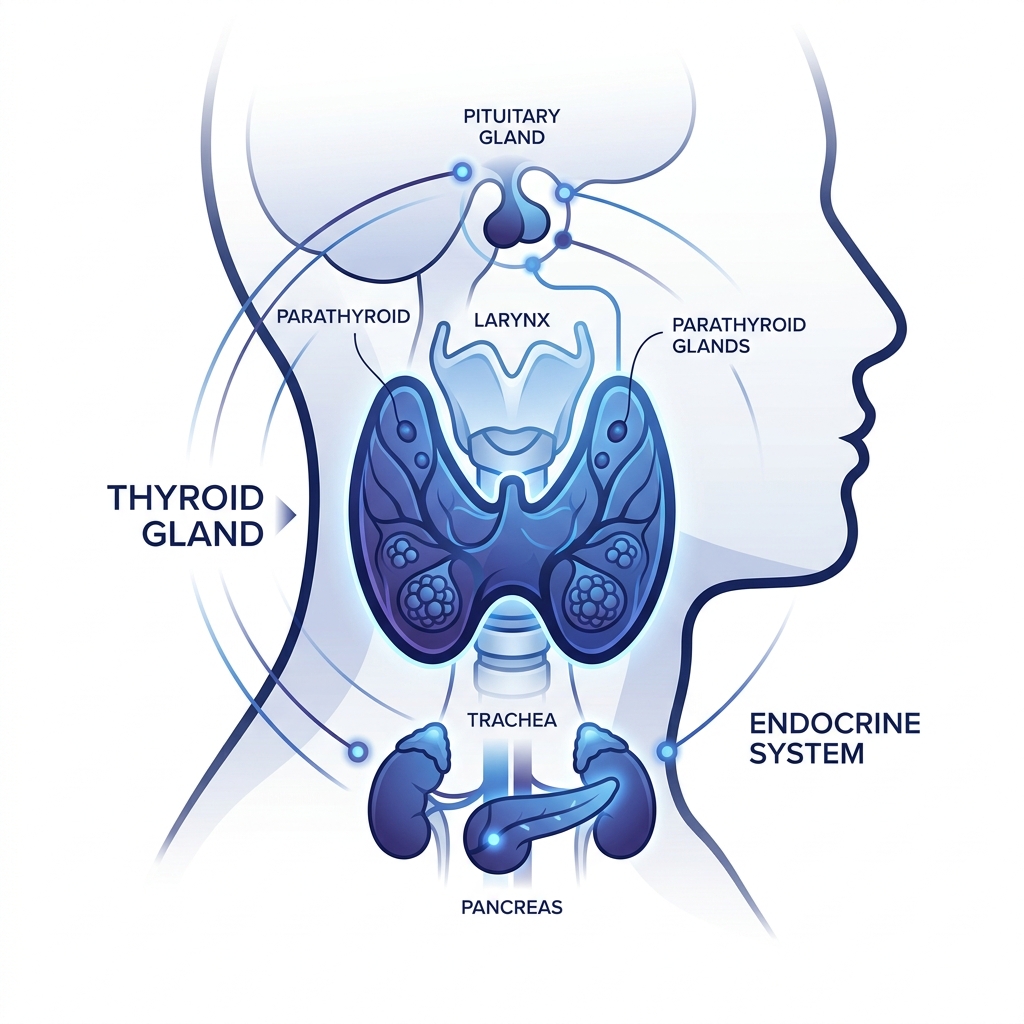
The thyroid is a small butterfly-shaped gland at the base of the neck, and it sets the pace for energy expenditure, body temperature, weight regulation, and heart rhythm. To check how it is working, doctors order a thyroid panel. Here is what the three main hormones on that panel represent.
TSH — the signal, not the hormone
Thyroid stimulating hormone is produced by the pituitary gland in the brain, not by the thyroid. It is the instruction being sent, so it moves in the opposite direction to the gland it is instructing:
- High TSH suggests an underactive thyroid (hypothyroidism). The pituitary is signalling harder because it is not seeing enough hormone in response.
- Low TSH suggests an overactive thyroid (hyperthyroidism). The pituitary has eased off because there is already plenty circulating.
That inversion is the single most common source of confusion on a thyroid report: a high number on the TSH line points to an underactive gland, not an overactive one.
Free T4 and Free T3
T4 (thyroxine) is the main hormone the thyroid actually secretes. It is largely a storage form; tissues convert it into T3 (triiodothyronine), which is the version that drives metabolism inside cells.
The word free matters. Most thyroid hormone circulates bound to carrier proteins and is unavailable to cells. Free T4 and Free T3 measure only the unbound fraction, which is why they stay meaningful when carrier protein levels shift — during pregnancy or on oestrogen-containing medication, for example, where a total T4 would move without the available hormone having changed.
The classic patterns
TSH and Free T4 are read as a pair, because the combination identifies the pattern that neither number shows alone:
| Pattern | TSH | Free T4 |
|---|---|---|
| Primary hypothyroidism | Elevated | Low |
| Subclinical hypothyroidism | Elevated | Normal |
| Primary hyperthyroidism | Suppressed | Elevated |
| Subclinical hyperthyroidism | Suppressed | Normal |
Why thyroid results move between draws
- TSH follows a daily rhythm, peaking overnight and dipping in the afternoon, so collection time affects the number
- Pregnancy shifts the reference range by trimester — a normal non-pregnant TSH may be out of range in the first trimester
- Acute illness can transiently distort the whole panel
- Biotin supplements interfere with many immunoassays and can produce a strikingly false result; laboratories usually ask that they be stopped before the draw
Reference ranges for these markers
Open the library entry for the published range, sample type, and citations.
Keep your own results in one place
File the reports behind these numbers under each family member and watch repeat values build into a trend. Free to start.
Educational content only. This article describes what a test measures and how published reference ranges are defined. It is not a diagnosis, does not interpret your personal results, and is not a substitute for a qualified doctor. Reference thresholds cited are those published by bodies such as the WHO, NIH, and CDC, and can differ between laboratories.